

Spring Snowmelt Sewer Backup: Why It Happens Even If Your Pipes Are Fine
Your Sump Pump Working Perfectly Doesn’t Mean You’re Safe
Here’s the thing almost nobody expects: your basement can back up during spring melt even when every piece of your own plumbing is working exactly as it should. It’s a genuinely common assumption that a working sump pump means you’re covered, and it’s wrong in a specific, important way. A sump pump manages groundwater collecting in a sump pit. A sewer backup travels a completely different path, through your drains, toilets, and floor drains. The two systems don’t overlap, and a sump pump doing its job perfectly does absolutely nothing to stop wastewater from finding its way back up through a floor drain if the sewer system itself is overwhelmed.
What’s Actually Overwhelming the System: Inflow and Infiltration
Municipal sewer utilities have a specific term for this, and it’s worth knowing because it explains why this happens even to homes with no plumbing problems of their own. Inflow and infiltration, generally shortened to I&I, describes excess clear water getting into a sanitary sewer system that was never designed to carry it. It happens two distinct ways.
The Math Behind Why a Few Illegal Connections Cause a Neighborhood-Wide Problem
This is the part that surprises people. It doesn’t take widespread violations to overwhelm a system. One frequently cited example from a municipal wastewater program: in a neighborhood of roughly 200 homes, it takes only six to eight sump pumps running continuously during wet weather to trigger a backup across the system. That’s a tiny fraction of the neighborhood causing a shared problem for everyone connected to the same line.
Why This Hits Hardest in Spring Specifically
Spring combines two things that individually stress a sewer system and, together, genuinely overload it. Snowmelt sends a large volume of water into the ground over a compressed window, and spring rain frequently arrives on top of already-saturated soil that can’t absorb much more. Groundwater tables rise. Any crack, faulty joint, or illegal connection along a line becomes a more active entry point than it would be during a dry summer month, and the sewer system, sized for wastewater flow rather than stormwater volume, starts taking on water it was never built to carry.
What Happens When the System Actually Overloads
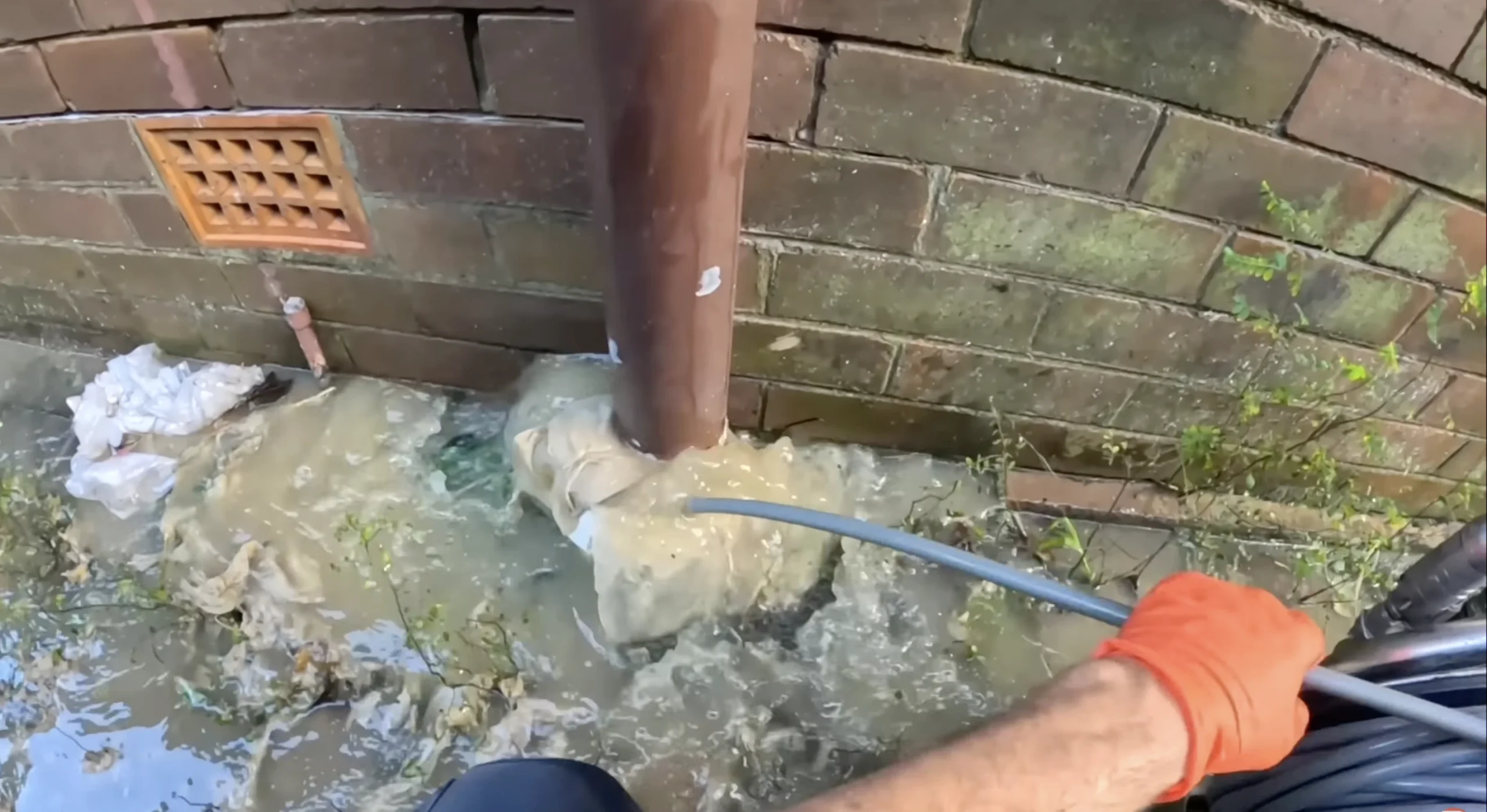
When a sanitary sewer can’t handle the combined volume, wastewater looks for the lowest available opening to escape through. In most homes, that’s a basement floor drain, though a shower, tub, or even a toilet at a low elevation can serve the same function. This is called a sewer surcharge, and it’s the direct cause of the backups that show up in basements during heavy spring saturation, sometimes in homes with private plumbing in perfectly good condition.
How Utilities Actually Find These Problems
Because I&I sources aren’t always obvious, municipal programs use a few specific diagnostic methods. Building inspections send crews door to door checking basements for improper connections. Dye testing introduces a visible dye at a suspected source and confirms whether it shows up downstream. Smoke testing pumps smoke into the sewer line itself, and wherever that smoke escapes at the surface reveals a crack, gap, or improper connection, without needing to dig anything up first.
What You Can Actually Do About It
If your sump pump discharges into your home’s plumbing system rather than outside, that’s very likely an illegal connection and a real contributor to exactly this problem. The fix is straightforward: disconnect it and reroute discharge to daylight, directly onto your lawn or another approved outdoor location, typically required to be at least a few feet from your foundation.
For infiltration specifically, a camera inspection identifies where the actual entry points are before recommending a repair. A backwater valve is also worth understanding: it’s a device installed on your sewer line that allows wastewater to flow out but physically prevents it from flowing back into your home during a surcharge event, a genuinely direct defense against exactly this spring backup scenario, separate from and complementary to your sump pump rather than a substitute for one.
Why This Matters More in Spokane Specifically
Spokane sees somewhere around 44 inches of snow in a typical year, and spring melt sends a real volume of water into the ground over a short window, exactly the condition that drives I&I spikes elsewhere. It’s also worth knowing that downtown Spokane and South Hill still run on an older combined sewer system, where stormwater and sanitary flow share the same pipes rather than running separately, adding another layer of seasonal capacity pressure specific to those neighborhoods during heavy snowmelt. Add to that a city with plenty of pipe in the ground that predates modern joint sealing and pipe materials, more prone to cracking and letting groundwater in, and the conditions for infiltration specifically are more present here than in newer, more uniformly constructed cities.
Frequently Asked Questions
If my sump pump is working, why is my basement still backing up?
A sump pump manages groundwater collecting in a sump pit, a completely separate system from your sewer line. It does nothing to stop wastewater from backing up through a floor drain, toilet, or tub if the sewer system itself is overloaded.
What’s the difference between inflow and infiltration?
Inflow is water entering through direct, typically illegal connections like a sump pump or downspout plumbed into the sanitary sewer. Infiltration is groundwater seeping in through cracks, leaky joints, or faulty connections in aging pipe.
Is it actually illegal to connect my sump pump to the sewer line?
In the large majority of municipalities, yes. It’s prohibited by local code specifically because of the strain it places on shared sewer infrastructure during wet weather.
How many illegal sump pump connections does it actually take to cause a backup?
Surprisingly few. One commonly cited municipal example found that just six to eight continuously running sump pumps in a 200-home neighborhood were enough to trigger a system-wide backup.
What is a sewer surcharge?
It’s what happens when a sanitary sewer system can’t handle the combined volume of wastewater and infiltrated water, forcing wastewater to escape through the lowest available opening, usually a basement floor drain.
Does spring really make this worse than other seasons?
Yes. Snowmelt and spring rain both saturate the ground and raise the water table at the same time, which increases both inflow and infiltration simultaneously, right when sewer systems have the least spare capacity.
What’s a backwater valve, and do I need one?
It’s a device installed on your sewer line that lets wastewater flow out normally but physically blocks it from flowing back into your home during a surcharge event. It works alongside a sump pump rather than replacing it.
How do I know if my sump pump is illegally connected to the sewer?
Check where the discharge pipe actually goes. If it connects to another pipe inside your home rather than running directly outside at ground level, it’s very likely improperly connected.
Can a camera inspection actually find infiltration sources in my line?
Yes. A camera run through your private lateral can identify cracks, faulty joints, and root intrusion points that are letting groundwater into the system.
Is spring sewer backup covered by homeowners insurance?
Generally not automatically, since it’s often treated as a sewer backup event distinct from typical water damage coverage. Many insurers offer an optional rider specifically for sewer backup, worth checking on your own policy.
Related Reading
Backing up every spring?
Camera inspection finds the actual entry point, backwater valve options available.
Call (858) 878-6414