

French Drain Cleaning in Spokane, WA
Water pooling near your foundation or a soggy patch that won’t dry out usually means your French drain isn’t doing its job anymore. We clear it and check the whole system before anything gets worse.
Not the Same Thing as a Storm Drain
Here’s a distinction worth getting straight before anything else: a French drain isn’t part of the city’s storm sewer system. It’s a private system on your own property, a perforated pipe buried in a gravel-filled trench, usually running along a foundation or across a low spot in the yard, designed to intercept groundwater and surface runoff before it becomes a problem. Some French drains connect to a sump pump. Others simply daylight, meaning they exit somewhere downhill and let gravity finish the job. Either way, it’s your system, on your property, and nobody’s checking it but you.
A well-designed French drain can move a genuinely large volume of water, often somewhere around 75 gallons per minute. That’s exactly why it’s worth taking seriously when it stops working. The water doesn’t just disappear because the drain’s clogged. It goes wherever it was supposed to be redirected away from instead, which is usually your foundation.
What We Do, Honestly
We clear clogged French drains for Spokane homeowners dealing with water pooling near a foundation, a persistently soggy patch of yard, or a basement that’s staying damp longer than it should. We’re licensed and insured to work in Washington. This is a service we handle alongside our regular drain and sewer work, and if a French drain’s condition turns out to need more than clearing, digging, replacement, we’ll say so rather than pretend a cleaning fixes something structural.
What Actually Clogs a French Drain
French drains clog gradually, from mud, sediment, leaves, and general organic debris working its way in through the gravel and the perforations over years. Tree roots find their way in too, the same way they do with any buried pipe, particularly in established yards with mature landscaping. Sometimes the problem isn’t a clog at all. A section installed incorrectly, or a length of pipe that’s collapsed or shifted under years of soil pressure, can mimic a clog’s symptoms without actually being one.
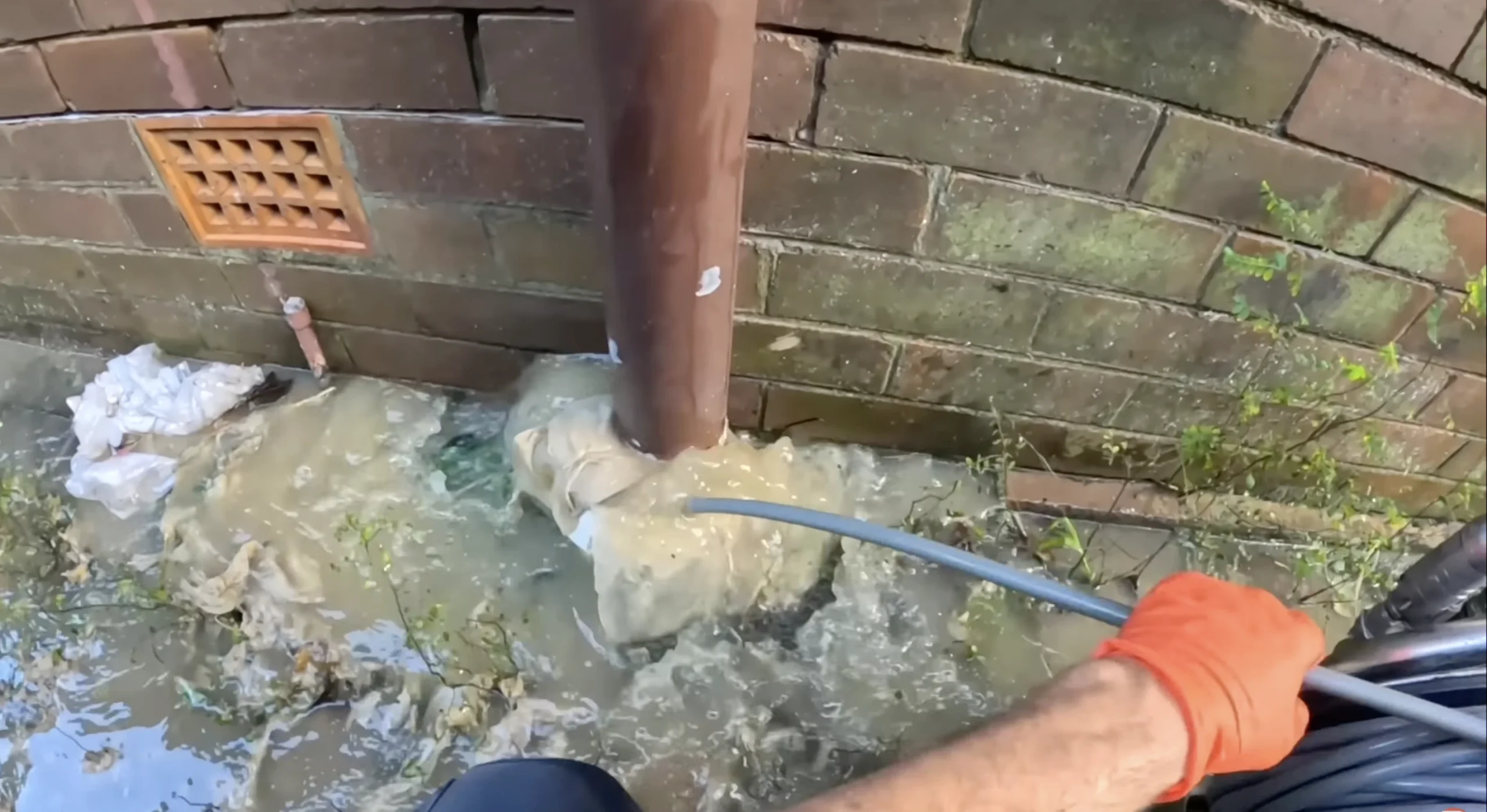
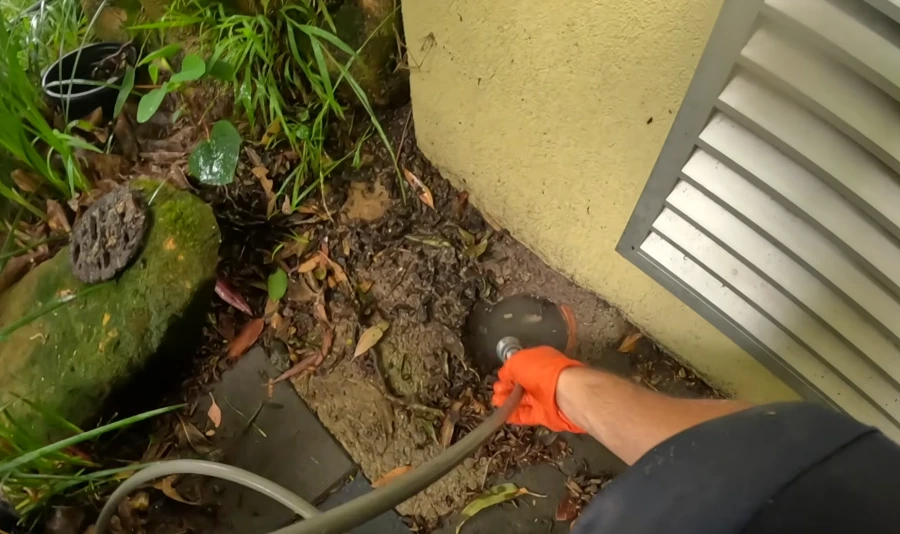
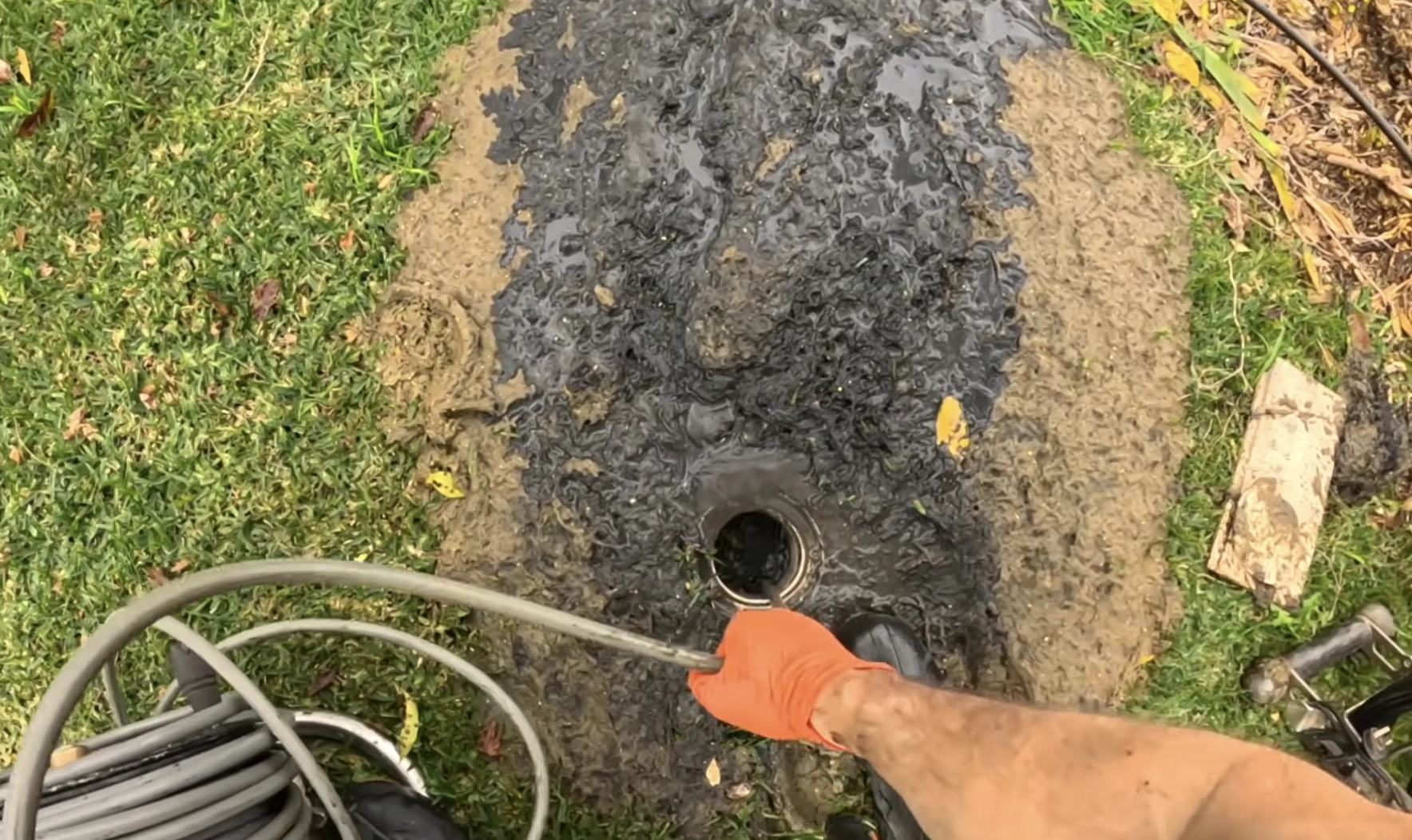
The method depends on what we’re dealing with and how the system was built. For straightforward clogs, an electric sewer snake or a pressure washer run through an access point clears debris and restores flow without needing to dig anything up. For more severe blockages, hydro jetting is sometimes the better tool, since it scours the pipe more thoroughly than a snake alone. Worth knowing upfront: the pipe material matters here. PVC generally handles mechanical snaking without much risk. Older or cheaper corrugated pipe is more prone to damage from the same process, which is part of why we check what we’re actually working with before running equipment through it.
If a section has genuinely collapsed rather than just clogged, cleaning isn’t going to fix it. That’s a repair or replacement conversation, and we’d rather tell you that directly than run a snake through a line that needs to be dug up instead.
Our Process
Usually we start by asking what’s actually happening: standing water near a specific spot, a basement staying damp, or a drain that’s visibly not moving water the way it used to. From there, we locate the access point, or points, and run the appropriate clearing method for what we find. Once the line’s clear, we check flow to confirm water is actually moving through the system the way it’s supposed to, not just technically unclogged at the access point while still blocked further down.
It’s usually a fairly contained job for a straightforward clog. A system with a collapsed section, or one we can’t locate an access point for easily, takes longer and sometimes means a more involved diagnostic step first.
What Happens If You Skip It
A French drain that’s not working doesn’t fail quietly. Water that should be redirected away from your foundation instead pools right where it was never supposed to be, and prolonged moisture against a foundation is exactly the kind of slow, expensive problem that’s much cheaper to prevent than to fix after the fact. Left long enough, that can mean basement moisture, mold, or actual foundation damage, all considerably more involved than clearing a drain would have been.
What We Won’t Do
No invented customer quote here to sell you on this. What’s actually true, based on what we see elsewhere in this industry: the most common mistake isn’t a bad cleaning, it’s someone running a snake through corrugated pipe without checking the material first, which can do more harm than the original clog. We check what we’re working with before we run equipment through it, not after something goes wrong.
Why This Matters More in Spokane Specifically
Spokane sees somewhere around 44 inches of snow in a typical year, and spring melt sends a real volume of water into the ground over a short window. Established, tree-lined neighborhoods across the city are also exactly where French drains are most likely to have root intrusion, since mature root systems reliably find their way toward any consistent moisture source, including a functioning drain. Between seasonal meltwater and decades-old landscaping, a French drain that’s never been checked is a genuinely common source of a wet basement nobody can otherwise explain.
Why People Choose to Work With Us
- Pipe material checked before running equipment through it
- Price agreed before we start, not a number that shifts
- Honest repair-vs-clean recommendation, not a default
- Flow verified after the fact, not just assumed clear
Where We Work
We serve Spokane and the surrounding Inland Northwest broadly.
- South Hill
- Browne’s Addition
- Manito-Cannon Hill
- Cliff-Cannon
- Comstock
- Emerson-Garfield
- West Central
- Rockwood
- Corbin Park
- Balboa
- Kendall Yards
- Spokane Valley
- Liberty Lake
- Cheney
- Airway Heights
- Deer Park
- Five Mile Prairie
Not sure if you’re in range? Just call. We’ll tell you honestly whether a visit makes sense for your specific address.
Frequently Asked Questions
How much does French drain cleaning cost in Spokane?
Professional cleaning typically runs somewhere between $150 and $600, depending on the severity of the clog and how the system was originally installed. The exact number depends on what we find once we’re actually looking at it.
How often should a French drain be cleaned?
A reasonable general guideline is once or twice a year for a system in an area with heavy tree cover or seasonal debris, though a well-maintained system in a cleaner yard may need attention less often.
How do I know if my French drain is clogged versus something more serious?
Water pooling near the drain’s outlet, a soggy patch that won’t dry out, or a basement staying damp longer than usual are all signs worth checking. A collapsed or shifted section can mimic a clog’s symptoms.
Can tree roots really get into a French drain?
Yes. The same way roots seek out sewer lines, they find their way toward the consistent moisture inside a functioning French drain, particularly in established, tree-lined yards.
What’s the difference between a French drain and a storm drain?
A French drain is a private system on your own property, managing groundwater and runoff around your foundation. A storm drain is part of the municipal system, connected to the city’s broader stormwater infrastructure.
Can cleaning damage my French drain?
It can, if mechanical snaking is run through older or more fragile corrugated pipe without checking the material first. PVC generally handles this process without much risk.
What if my French drain is actually collapsed, not just clogged?
Cleaning won’t fix a collapsed or structurally failed section. That requires repair or replacement, and we’ll tell you directly if that’s what we’re actually looking at.
Does a French drain connect to my home’s sewer line?
No. It’s a separate system entirely, managing surface and groundwater around your property rather than wastewater from your home.
Is it normal for a French drain to need a sump pump?
Some systems are designed with one, particularly where the drain can’t simply daylight to a lower point on the property. It depends on your yard’s grading and the system’s original design.
How long does French drain cleaning usually take?
A straightforward clog is often a fairly quick visit. A system with a hard-to-locate access point, or one where a collapsed section needs to be identified first, takes longer.
Areas We Serve
Water pooling where it shouldn’t?
We’ll check the whole system, not just clear what’s visible.
Call (858) 878-6414