
Sewer Camera Inspection in Spokane, WA — See the Problem Before We Quote a Fix
A camera inspection shows you exactly what’s happening inside your line, root intrusion, a cracked joint, or nothing at all, before anyone recommends a repair. Most residential inspections take under an hour, and you get to watch the footage with us.
The part of your house nobody inspects
If you’ve never had a sewer camera inspection in Spokane, you’re not unusual, most homeowners haven’t, and most never think to until something forces the question. Buy a house here and you’ll get an inspector crawling through the attic, checking the furnace, testing outlets, running water through every fixture twice. None of it touches the sewer line. That pipe runs six feet underground from your foundation to the street, and a general home inspector has no tool for it and, frankly, no obligation to look. It’s simply outside the scope of what a standard inspection covers.
Most people don’t find this out until they need to. Either a drain starts acting up a few months after closing, or they’re selling a house and a buyer’s agent asks a question nobody prepared for. A sewer camera closes that gap. It’s a small camera on a flexible cable, run through an existing cleanout or another access point, sending back a live picture of exactly what’s down there.
Why this matters more in Spokane specifically
A quarter of Spokane’s housing stock predates 1940, and the median home in the city was built in 1961. Put plainly, a lot of what’s buried under Spokane properties is original pipe: clay tile, cast iron, sometimes Orangeburg fiber pipe from the postwar decades. A house can look immaculate on a walkthrough, fresh paint, updated kitchen, and still be sitting on a sewer lateral that’s one root intrusion away from a real problem. There’s no way to know without a sewer camera inspection, and there’s no way to guess accurately just from a home’s age or curb appeal.
What the camera actually shows us
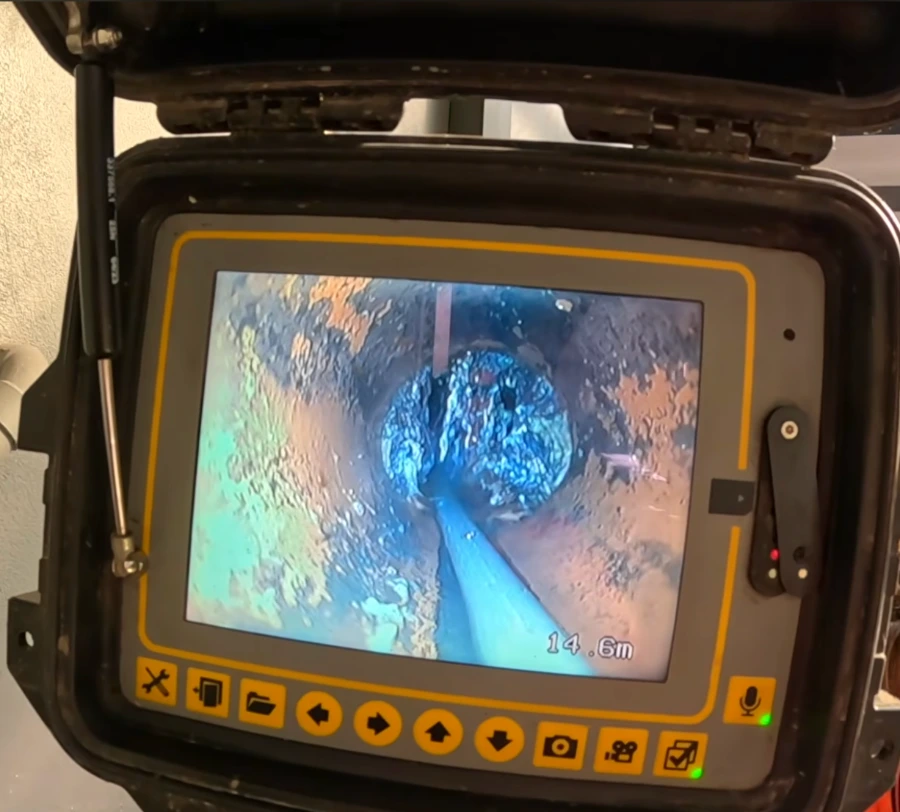
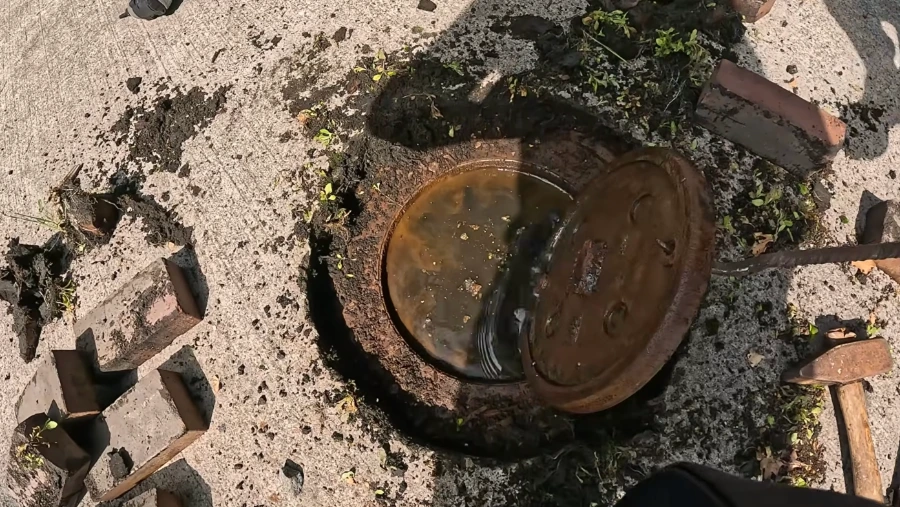
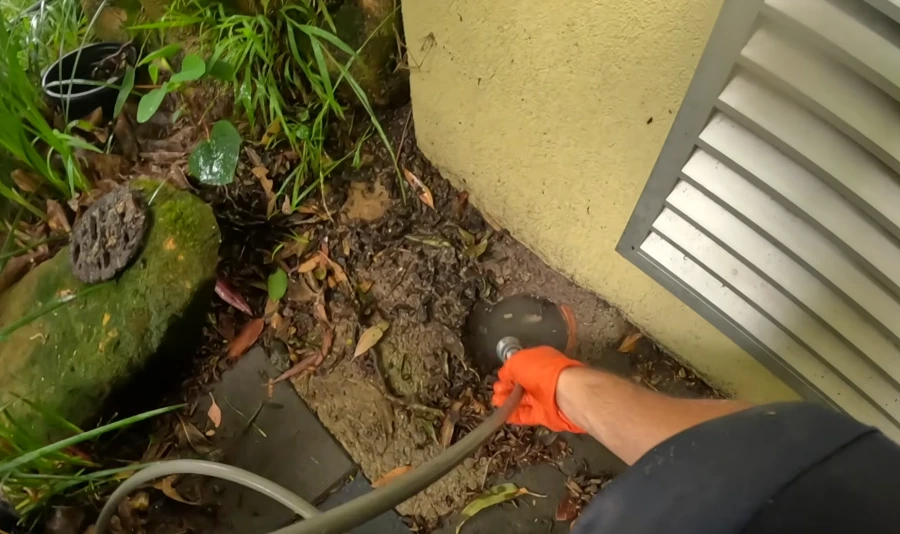
The equipment itself is straightforward: a waterproof camera head, a push cable that can run well past a hundred feet, and a monitor with a built-in distance counter so we know exactly how far down the line anything we find actually sits. We feed it in through a cleanout when there’s one available, or through a toilet flange or another accessible fixture when there isn’t.
On the screen, we’re watching for a handful of specific things. Root intrusion at pipe joints, which is the single most common finding in Spokane’s older, tree-lined neighborhoods. Cracked or offset clay tile. Cast iron that’s corroded and narrowed from the inside. Orangeburg pipe that’s gone out of round or started to delaminate. Bellied sections, where the pipe has sagged low enough that wastewater pools instead of draining through. And sometimes, genuinely, nothing at all. A clean line is a real and useful outcome, not just an anticlimax.
When people actually call for this
Three situations account for most of our camera inspection calls. Buying an older home and wanting to know what’s actually under it before closing. A drain that’s slow or backing up with no obvious cause, where the camera tells us whether it’s a simple clog or something structural. And homeowners who’ve simply never had it checked and want to know before it becomes a problem rather than after.
Each of those is a slightly different job in practice. A pre-purchase inspection is about documentation as much as diagnosis, you want the footage and a clear answer you can act on during a real estate transaction. A diagnostic call is faster and more targeted, usually focused on one specific section of line. A peace-of-mind inspection is the most flexible of the three, and honestly the easiest to schedule around.
How we run the sewer camera inspection
Quick conversation first
We ask why you’re calling, since that changes what we’re specifically watching for.
Locate access
Usually an existing cleanout, sometimes a toilet flange or another accessible fixture.
Feed the camera
A steady, deliberate pace the full length of the line. Rushing is how things get missed.
Walk through the footage
Together, in plain terms, with anything we find marked by exact distance.
A standard residential run takes somewhere between thirty minutes and an hour, depending on line length and how many access points we need to use. If the line’s in good shape, you’ll hear that plainly. If it isn’t, you’ll see exactly why before anyone quotes you a repair.
What it costs
The real cost of skipping it
An old pipe that’s already cracked or root-damaged doesn’t hold steady while you decide whether to look at it. It gets worse, usually on its own schedule rather than yours, and Spokane’s freeze-thaw winters don’t help, since shifting soil adds fresh stress to an already-compromised line every year. For a homebuyer specifically, skipping this inspection means inheriting whatever condition that pipe is actually in, sight unseen, and repair costs on a genuinely bad line can run into five figures. A one-hour camera run is a small price against that kind of exposure.
What we won’t tell you
We’re not going to hand you a customer testimonial with a name attached, because we’re not going to invent one. What we can say honestly: the most common complaint we hear about other companies isn’t that the inspection was wrong, it’s that nobody actually showed the customer the footage, or a repair got recommended without much explanation of what the camera found. That’s specifically what we do differently. You watch the same screen we’re watching, in real time, and you keep a copy of the recording afterward.
There’s a version of this business where the inspection is basically a formality on the way to selling a repair. We’d rather it not work that way here. If the camera shows a line that’s aging but structurally sound, that’s the answer, not a soft opening for an upsell. Plenty of older Spokane pipe is in worse cosmetic shape than functional shape, and telling the difference honestly is most of what this service is actually for.
What a good inspection looks like versus a rushed one
Not every camera run is equal, and it’s worth knowing what separates a useful inspection from a quick look that misses things. A rushed run pushes the camera through fast, glances at anything obviously blocking the pipe, and calls it done. A proper one moves at a steady, deliberate pace the entire length of the line, records continuously rather than in short clips, and actually pauses at anything that looks even slightly off instead of pushing past it. The difference matters most at pipe joints, which is exactly where root intrusion and offset clay tile tend to show up, and exactly where a fast camera pass is most likely to miss something.
Why people choose to work with us
- You watch the actual footage, not a summary
- Flat pricing before we start
- No repair recommendation without camera confirmation
- An honest “the line looks fine” when it does
Neighborhoods where this comes up most
South Hill, Browne’s Addition, Manito-Cannon Hill, Cliff-Cannon, and Comstock account for a disproportionate share of our camera inspection calls, and it’s not a coincidence. These are Spokane’s older, most tree-lined residential pockets, exactly the combination of aging pipe and mature root systems that makes a camera inspection worth doing rather than optional. If you’re outside that radius, call anyway, and we can usually tell you quickly whether it makes sense for us to come out. Either way, a sewer camera inspection in Spokane is a small, one-time cost against a much bigger unknown.
Frequently Asked Questions
How much does a sewer camera inspection cost in Spokane?
Typically $150 to $400 as a standalone service, and included at no extra charge if you move forward with a repair or hydro jetting the same visit.
How long does the inspection take?
Usually thirty minutes to an hour for a standard residential property, depending on line length and how many access points are involved.
Do I need an existing cleanout for this?
It makes access easiest, but it isn’t required. We can often run the camera through a toilet flange or another accessible fixture if there’s no cleanout available.
Should I get a sewer scope before buying a Spokane home?
Yes, especially for anything built before 1980. A standard home inspection doesn’t include a sewer camera, and pipe condition genuinely can’t be judged from the surface.
Do I get a copy of the footage afterward?
Yes. We can provide the recorded video for your own records, useful for a home sale, a future repair conversation, or just your own peace of mind.
What does the camera find most often in older Spokane homes?
Root intrusion at aging clay or cast iron joints is the most common finding, followed by general corrosion in cast iron and, in some pre-1970s homes, deformed or delaminating Orangeburg pipe.
Can the camera itself damage my pipes?
No. It’s a purely diagnostic tool that doesn’t apply pressure to the pipe walls, unlike jetting or snaking.
How often should an older home get its line checked?
There’s no single fixed interval, but homes over roughly 40 years old are generally worth checking more often than newer construction, especially if the line has never been scoped or you’ve noticed any change in how drains are performing.
Will this tell me if I need a repair or just a cleaning?
Yes, that’s the entire point of running it. The footage shows whether the issue is a straightforward blockage cleaning can resolve, or a structural problem with the pipe itself that cleaning won’t fix.
Do mortgage lenders require this inspection?
Not typically as a standard requirement, though some lenders or insurers may request one depending on a property’s age or condition, and buyers often request one independently during a purchase.
Areas We Serve
Ready to see what’s actually in your line?
Camera inspection first, flat price before we start.
Call (858) 878-6414